Moodle
Within the TASC project, Moodle functioned as the central digital learning environment that supports the design, delivery, piloting, and further development of the European joint training programme on sustainable communication. The Moodle is ready to use and will be available for 10 years, starting in 2026 up until at least 2036 as part of the sustainability plans. It hosts the full structure of the programme, including the five training modules, the three progressive learning levels (Grades A, B, and C), and the associated learning activities, resources, and assessment formats. In doing so, Moodle enables a coherent organisation of the curriculum and ensures that all participants—across different countries and institutional contexts—engage with the same structured learning pathways and content.
At the same time, Moodle plays a key role in connecting the different learning modalities embedded in the TASC project. The training programme is designed to be delivered through physical, blended, and fully virtual learning paths, and Moodle provides the digital backbone that integrates these formats into a unified system. It supports asynchronous learning, online interaction, and access to materials, thereby complementing face-to-face sessions and enabling flexible participation. In this way, the platform contributes directly to the transnational and inclusive character of the Teacher Academy, ensuring that learning trajectories remain accessible, comparable, and scalable across the consortium.
Crucially, Moodle is not only a delivery tool but also a core component of the piloting process. During the piloting phase, participants—both teacher trainers and teachers—actively engage with the modules, activities, and learning pathways through the platform. This allows the consortium to test the internal coherence of the programme, the alignment between learning objectives, activities, and outcomes, and the usability of the learning materials in authentic educational contexts. Because participants complete tasks, follow structured learning paths, and interact with the content directly in Moodle, the platform effectively operates as a “living laboratory” in which the training programme is experienced and validated in practice.
Through this use in piloting, Moodle also supports iterative improvement and quality assurance. The way participants navigate the platform, complete activities, and engage with the materials provides essential input for refining both content and instructional design. Combined with feedback gathered from other project components (such as the Teacher Boards and Communities of Practice), this ensures that the training programme evolves based on real user experiences and pedagogical needs. As such, Moodle contributes not only to implementation but also to evidence-informed development and optimisation of the Teacher Academy.
Finally, Moodle plays an important role in structuring learning progression and assessment within the project. It organises the training along three successive levels—foundational, applied, and professional—and supports the tracking of learning activities and the assessment of learning outcomes linked to each module and grade. This structured approach aligns with the overall goal of developing a 20 ECTS joint European programme and ensures that the training remains transparent, measurable, and transferable. By combining content delivery, interaction, assessment, and data-informed refinement in one integrated environment, Moodle becomes a key enabler of both the piloting phase and the long-term sustainability of the TASC project.
To access all the contents of the Moodle, please contact the project coordinator.
A virtual overview of the Moodle platform
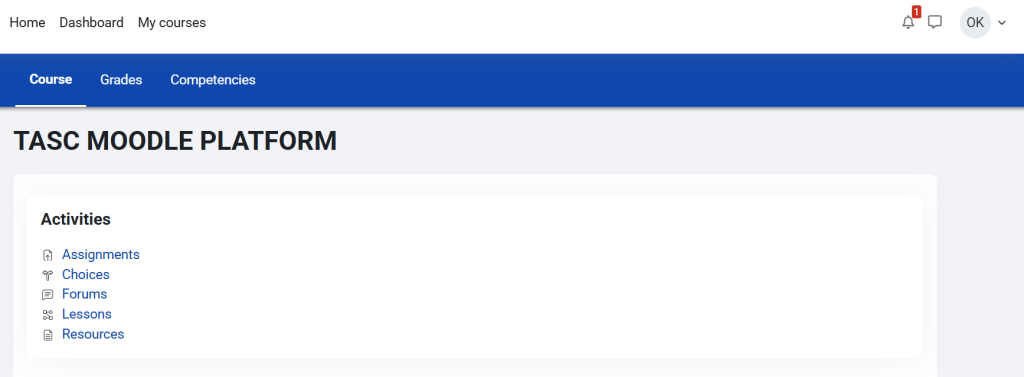
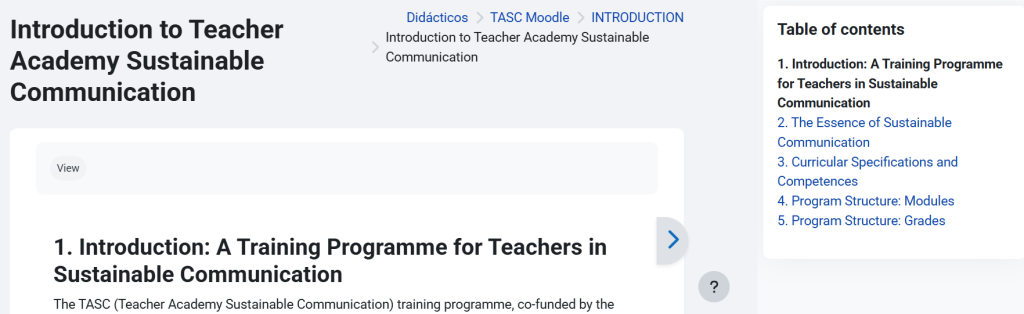
A virtual site view
To give you an idea of the set-up of the Moodle platform, you can watch a virtual site view in this video.
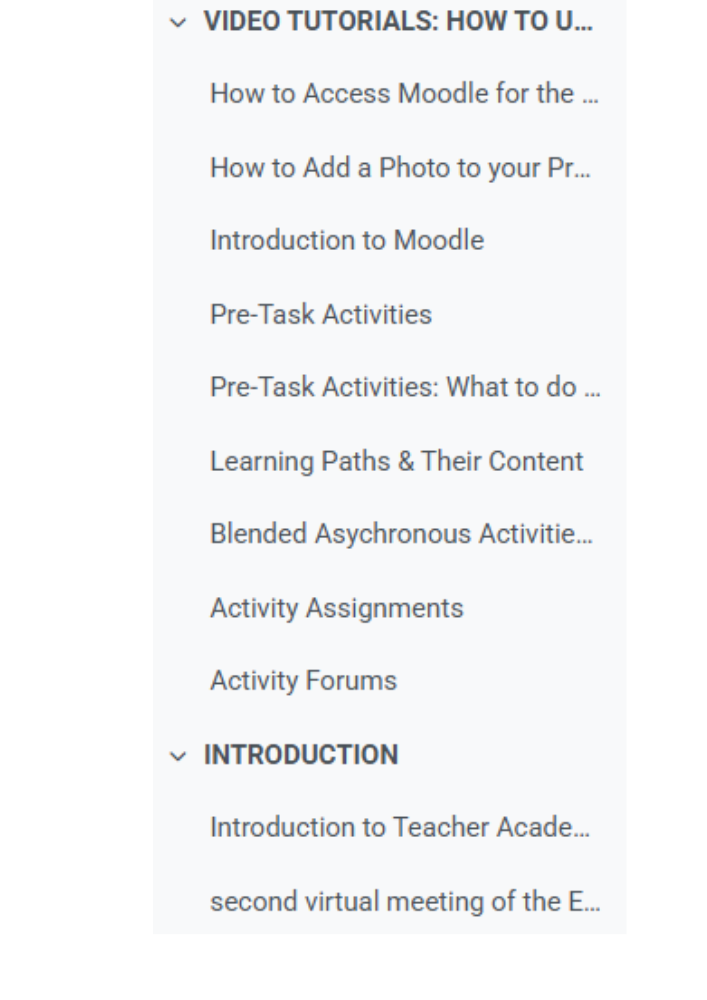
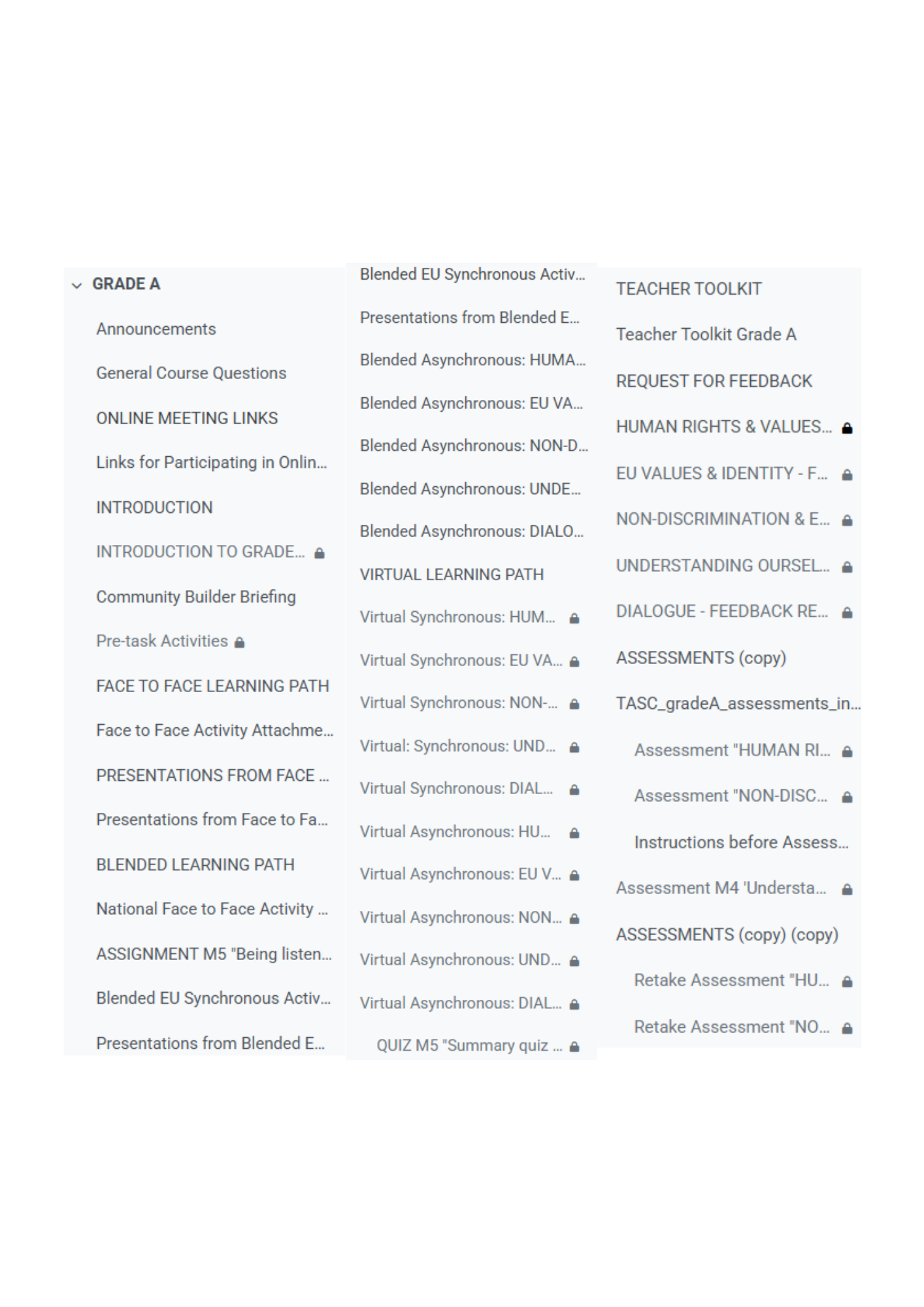
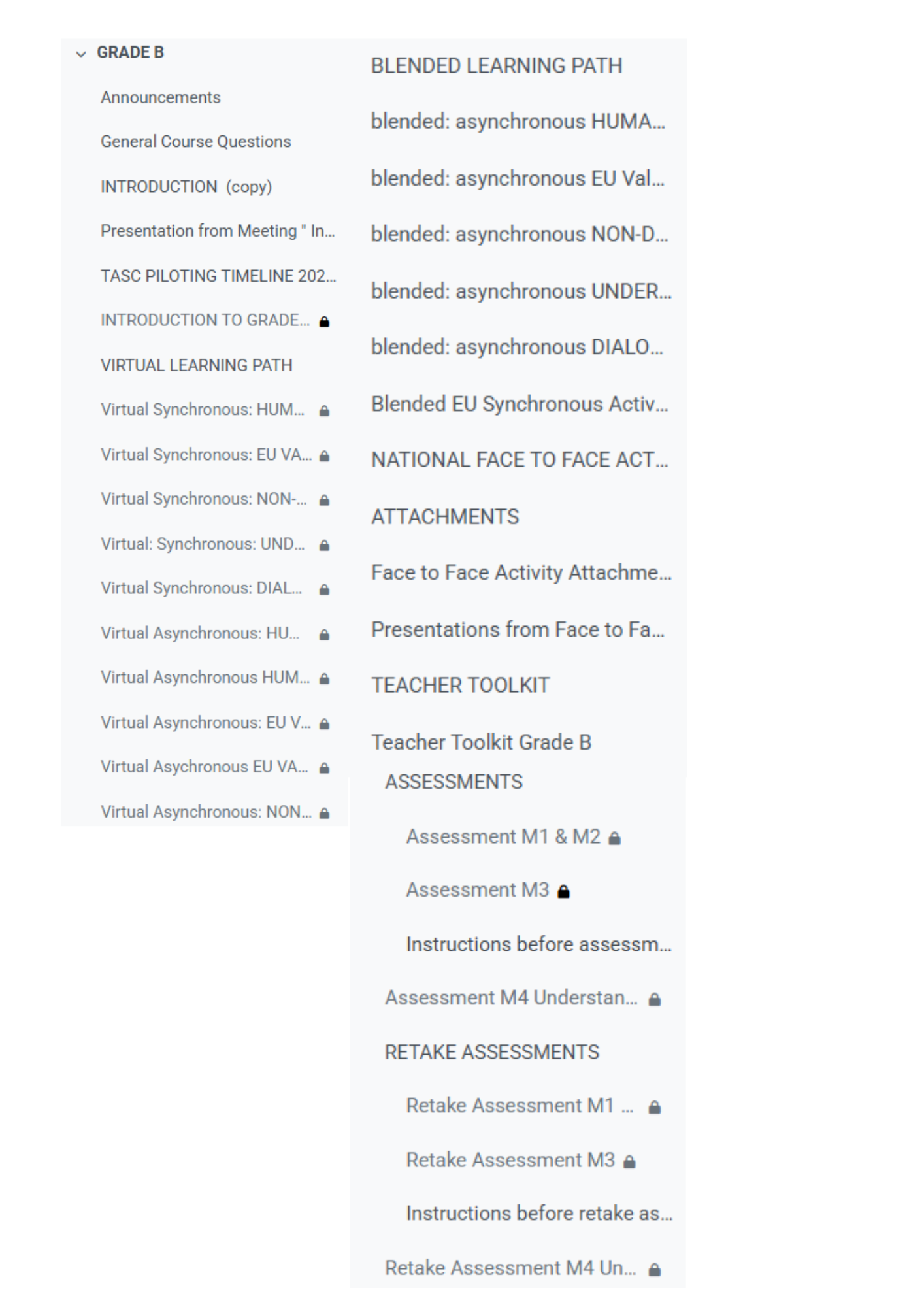
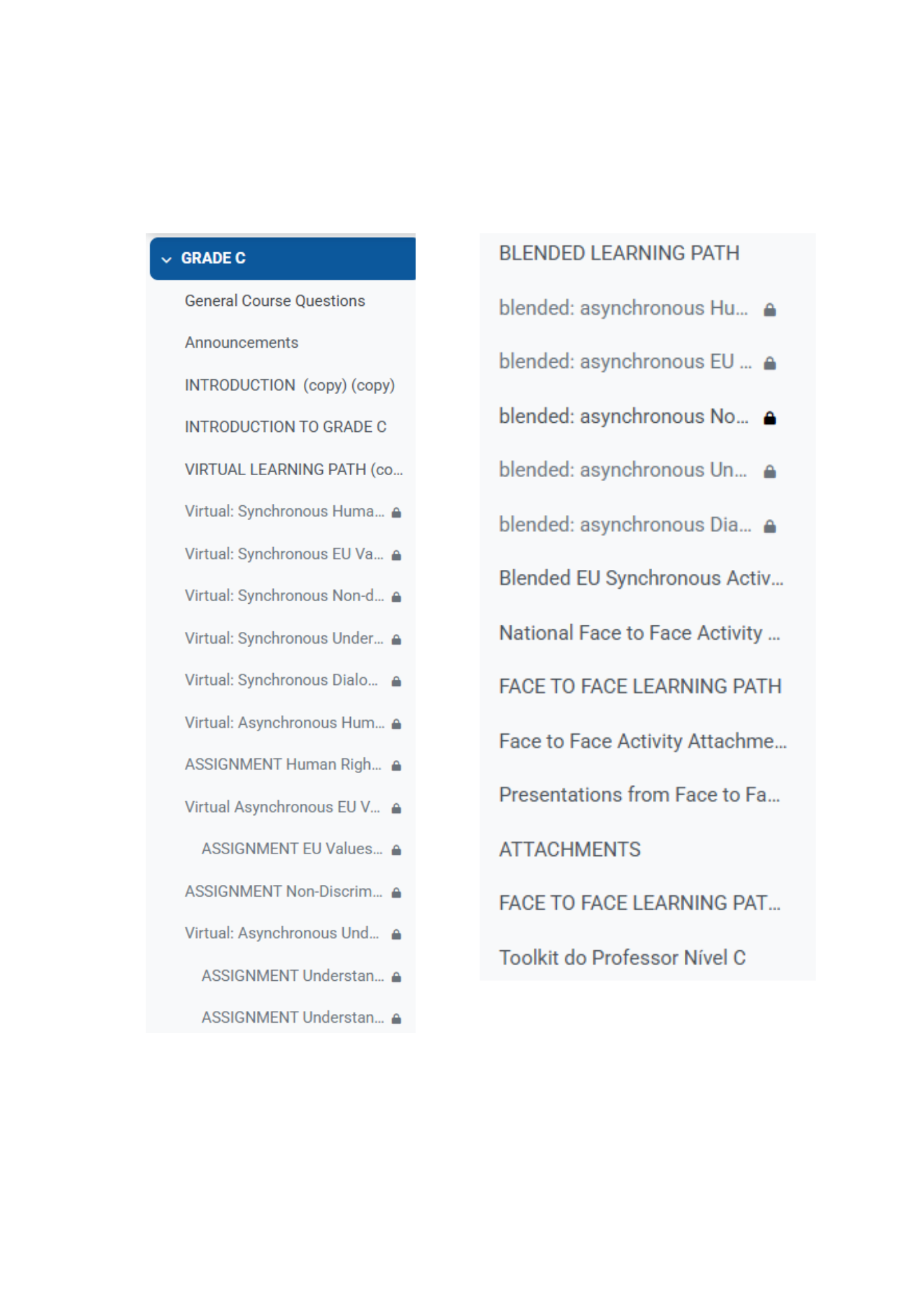
A site index
On the Moodle Platform, you will find all the content and materials needed to follow the training programme, with inclusion of discussion fora and assessment tasks. The platform also consists of presentations for trainers.
Translated versions
The Moodle is available in all the languages of the consortium, this being: Dutch, German, Lithuanian, Romanian, Portuguese, Spanish and Turkish.